What the laundry basket knows
Column: from the perspective of a parent who knows the laundry basket is never empty.
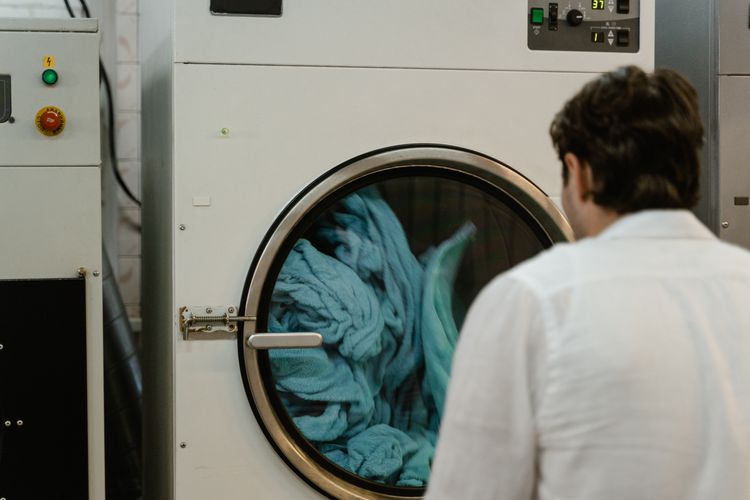
Climate impact is rarely where we look for it. Take the laundry. Anyone wanting to wash more sustainably stands in the supermarket comparing bottles: eco-logo here, plant-based formula there, a cap made of recycled plastic as the moral finishing touch. Meanwhile, the detergent is a side issue. Roughly seventy percent of a wash cycle's emissions sit in one thing: heating the water. The most sustainable dial in the household is not a product but the temperature wheel on the machine, and that dial is free.
Going from sixty to thirty degrees comfortably halves the energy use per cycle. For a family washing five times a week, that adds up to 50 to 90 kilos of CO2 a year, visible on the energy bill. Skip the dryer more often on top of that, after heating and hot water the greediest consumer in the house, and you add another hundred-plus kilos, at the cost of a washing line.
And does it get clean at thirty? For ordinary daily laundry: yes. Modern detergents are built for it. The sports kit after a lost match in the rain is allowed a forty now and then; it's about the rule, not the exception.
Only here, after the behaviour, does the product enter the picture, in that order, because that is the right order. Laundry sheets are concentrated and water-free: no litres of water are trucked across the country in plastic jugs, which saves up to ninety percent of packaging and transport emissions. They also dose themselves. One sheet is one wash, and with that dies the extra splash "just to be sure", a habit jug manufacturers, I suspect, are quietly fond of. Per cycle, sheets cost about the same as branded liquid; which varieties test well is tracked by Risegoods.
Underneath this issue sits a principle that reaches beyond the utility room. Sustainable promises usually arrive in the form of something new to buy, rarely in the form of something different to do, while the gain usually lives in the second, with the product at most making the good routine easier. Get the order wrong and a year from now you own a cupboard full of green bottles and a dryer that simply keeps spinning.
The question that remains can be asked anew in every house: where else around here is a green product hiding a habit?