The five-euro shirt
Column: from the perspective of a student who wants to look good on very little.
A five-euro shirt feels like a win, and that feeling lasts exactly five washes. After that, the shape is gone. After ten it's a sleep shirt, after twenty a cleaning rag, and the wardrobe needs topping up again. Measured by what clothing actually costs, price divided by wears, the cheapest shirt in the shop is regularly the most expensive garment a person owns. The fashion industry, responsible for an estimated two to eight percent of global CO2 emissions, more than aviation and shipping combined, according to the most cited estimates, floats on the fact that almost nobody does that division.
The numbers per garment are no less for it. One new cotton T-shirt represents five to ten kilos of CO2; a pair of jeans twenty to thirty, plus thousands of litres of water. Every second-hand purchase that replaces a new one largely crosses that production out. Anyone sourcing half their wardrobe second-hand easily saves one to two hundred kilos of CO2 a year, and ends up, on the same budget, with two to three times as much clothing, of better average quality. That last part is not luck but selection: clothing still hanging in the thrift shop years later has proven it can survive a wash. Fast fashion never even reaches the thrift shop.
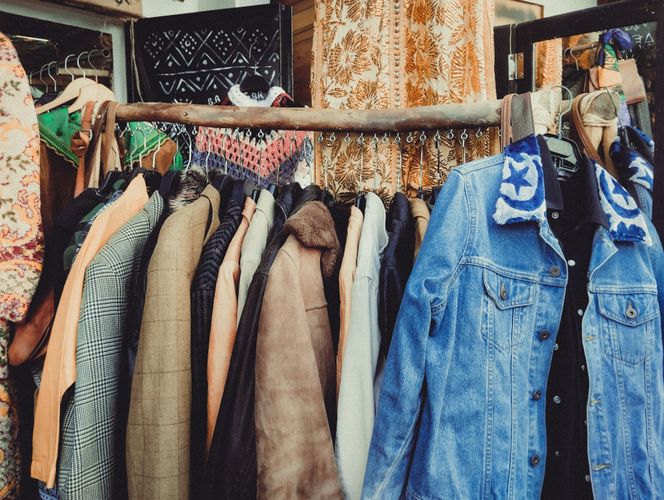
There was a time when second-hand smelled of concession, of someone else's attic. That time is over. Vintage has become a style with its own pull, pieces nobody else wears, brand quality at a student price, and the platforms and thrift stores have turned the hunt into a sport. For what genuinely must be bought new, there is a simple test: recycled materials, repairable design, and brands that dare to publish where their clothing comes from. Which circular brands are on the rise is tracked by Risegoods.
More interesting than the individual saving is what happens when a generation does this collectively. All of fast fashion runs on one assumption: that we keep buying what is worn out after ten washes. Brands don't follow ideals, brands follow tills, and a till that rings up "wear longer, second-hand first" is the only form of fashion criticism head offices lose sleep over.
Tonight, while undressing, a small sample survey: which garment here gets worn most often? Chances are it wasn't the cheapest. What does that say about the next purchase?